Published August 17, 2026 · RetroForge Supply Team
Retro Game Cartridge MOQ Guide: What Kickstarter Creators Need to Know
Ask any Kickstarter creator who has shipped a physical game what their biggest manufacturing headache was, and you'll hear the same three letters over and over: MOQ. While established publishers order cartridges by the tens of thousands, a typical crowdfunded retro game needs 200 units — and most factories won't even reply to that inquiry. This guide breaks down how retro cartridge MOQ actually works, what it really costs, and how to structure your campaign around it.
1. Why MOQ Is the #1 Pain Point for Crowdfunding Creators
Minimum order quantity is the single most common reason hardware crowdfunding projects stall between a successful campaign and a shipped product. The math is brutal: the industry average MOQ for custom game cartridges runs between 500 and 5,000 units once you need custom tooling, injection-molded shells, or dedicated SMT line time. Meanwhile, the median successfully funded indie retro project on Kickstarter needs roughly 200 units to fulfill backer rewards.
That gap forces creators into impossible choices:
Over-order: commit to 1,000+ units for a 200-unit campaign and eat the inventory risk on your own dime.
Under-spec: skip custom shells and ship generic off-the-shelf cartridges that look nothing like your campaign renders.
Delay: push fulfillment back 6–12 months while you hunt for a factory that will talk to you — the fastest way to burn backer goodwill.
The failure stories are well documented. Creoqode's Lyra+ handheld campaign collapsed into controversy after the original supplier reportedly breached its agreement and raised unit pricing mid-production, leaving the creator unable to fulfill at the funded price point — a textbook case of not locking manufacturing terms before launch. Smach Z, the handheld PC that raised over half a million dollars, spent years stuck in enclosure-quality limbo, with repeated tooling revisions and case finishes that never met the standard shown to backers. Neither project failed because of demand. They failed on the manufacturing side of the ledger — and MOQ economics sit at the center of both stories.
2. What Is MOQ — and Why Do Factories Set One?
MOQ isn't arbitrary gatekeeping. For a cartridge factory, every new order carries fixed setup costs that must be amortized across the production run. Three cost blocks drive virtually every minimum order quantity retro game quote you'll receive:
Injection mold tooling
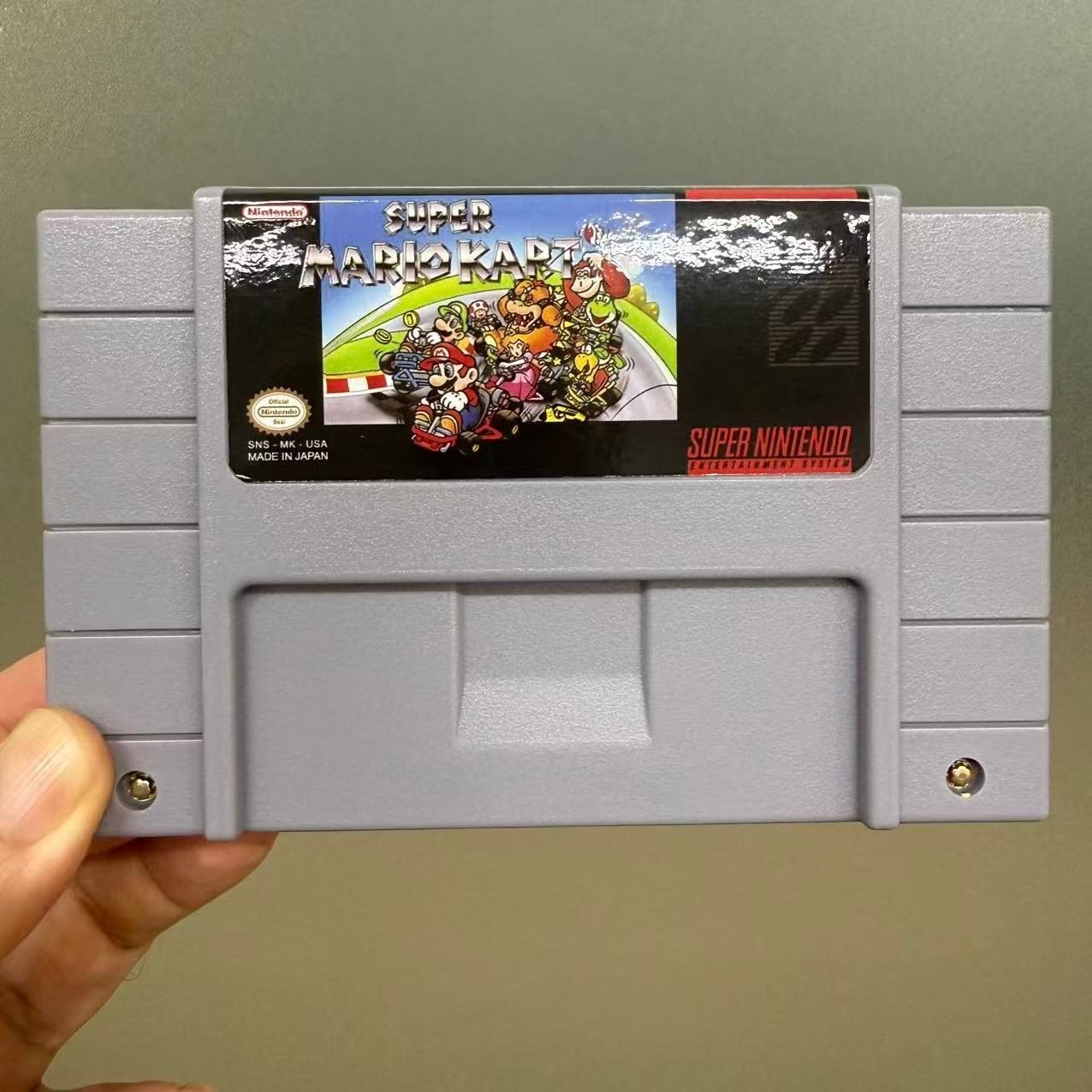
A custom cartridge shell — think Game Boy, NES, SNES, or Genesis form factors — requires a steel injection mold. Tooling for a two or four-cavity mold runs $2,000–$8,000+ depending on shell complexity, thread detail for screws, texture, and gate placement. That mold has a finite lifespan (roughly 300,000–500,000 shots for production steel), and the factory needs enough units to spread the tooling cost down to a sensible per-unit figure. Spread $3,000 of tooling over 200 cartridges and you've added $15 per shell before a single PCB is populated.
SMT line setup fees
Cartridge PCBs are populated on SMT (surface-mount technology) lines. Each changeover — loading solder paste stencils, programming pick-and-place feeders, first-article inspection — costs the factory real machine time and labor, typically $150–$500 per setup. A 200-unit run might occupy a line for 90 minutes of actual placement after two hours of setup. Medium and large factories running high-volume consumer electronics simply can't profitably interrupt their schedule for that ratio, which is why their kickstarter hardware manufacturing quotes come back with 3,000-unit minimums attached.
Labor and changeover overhead
Beyond the machines: project engineers, QC documentation, packaging specs, and export paperwork are largely fixed per order. A factory account manager spends the same hour on your 200-unit order as on a 50,000-unit order. Guess which one gets the better unit price.
3. The Shenzhen MOQ Reality, District by District
Shenzhen is not one manufacturing market — it's several, and knowing which district you're talking to tells you most of what you need to know about the quote you'll get.
Huaqiangbei — spot market, MOQ 1 to 500
The famous electronics markets of Huaqiangbei sell everything by the piece: standard GB, GBA, and NES cartridge shells, blank PCBs, flash chips, and assembled flashcarts at MOQ 1. Perfect for prototypes and dev samples. But customization stops at light mods — swapping label prints, occasionally recoloring existing shell molds — with light customization typically requiring ~500 units. There is no NRE engineering, no design-for-manufacturing review, and quality varies stall to stall. Treat Huaqiangbei as your prototyping lab, not your production partner.
Bao'an district hosts hundreds of mid-tier EMS (electronic manufacturing services) factories. This is where real low MOQ game cartridge projects usually land: custom shell tooling, proper SMT assembly, full QC, and export documentation, with minimums in the 500–2,000 unit range. These factories are agile and used to working with overseas indie clients, but you're paying for that flexibility in per-unit price, and tooling is quoted at full cost.
Longgang and beyond — Foxconn-tier, MOQ 5,000–50,000
The giant campuses in Longgang and the outer districts run consumer-electronics scale for global brands. Setup minimums of 5,000–50,000 units are standard, and their sales teams generally won't engage below that. Unless your campaign cleared seven figures, these factories are a research reference, not a realistic partner.
4. The Hidden Costs Behind the MOQ Number
The MOQ figure in a factory's first email is only the headline. Your actual cash requirement includes:
Mold/tooling fees: $2,000+ per shell project, often 50% due before steel is cut.
Unit price curves: anywhere from $0.16 per unit (basic Huaqiangbei flashcart boards at volume) to $5+ per unit for small runs of custom-tooled, assembled, tested, and packaged cartridges. Custom shells plus PCB assembly for 500 units typically lands in the $2.80–$4.50 range.
Freight: express air for 200 cartridges (~$250–$500) or sea freight with minimum billable volumes that penalize small runs.
Duties and VAT: US Section 301 tariffs on China-made goods, EU import VAT (collected at the border since 2021), and customs brokerage fees can add 15–30% to landed cost — money that must be budgeted at campaign time, not discovered at the port.
Creators consistently underestimate landed cost by 20–40% because factory quotes are FOB Shenzhen, not delivered to your garage. Model it all before you set your funding goal.
One often-missed line item: payment and platform friction. Kickstarter collects 5% plus payment processing fees of roughly 3–5%, currency conversion from USD to CNY can shave another 1–2% off, and wire transfer fees to Chinese factories run $30–$50 per remittance on small runs. None of these appear on any factory quote, but all of them come out of the money your backers pledged. Build a landed-cost spreadsheet with every line above before you announce a funding target — if the number that comes out is higher than your planned goal, it's far cheaper to learn that now than in month three of fulfillment.
To make this concrete, here's a representative quote structure for a custom Game Boy-style cartridge shell from a Bao'an-tier factory:
Line item
Cost
Shell injection mold (two-cavity, production steel)
$2,800
Shell unit price @ 5,000 pcs (ABS, UV-printed)
$0.35 / pc = $1,750
SMT assembly, PCB, flash, test @ 5,000 pcs
quoted separately, often $1.20–$2.00 / pc
Tooling deposit due at kickoff (50%)
$1,400
Upfront commitment before you see a single unit: roughly $3,450+ (mold plus first payment tranche) — and that assumes you can actually use all 5,000 shells. For a 300-backer campaign, you'd be financing 4,700 units of inventory on speculation. This is exactly the trap that sinks post-campaign projects: the campaign funds, the tooling invoice arrives, and the math stops working.
6. Five Strategies to Negotiate MOQ With a Factory
You can't eliminate MOQ, but you can bend it. These are the tactics that actually work:
Ask for tiered pricing, not a single MOQ
Request quotes at 500 / 1,000 / 3,000 / 5,000 units. Tiered quotes reveal where the factory's real cost breakpoints are and give you a credible basis for negotiating. Often the 1,000-unit price is only 8–12% above the 5,000-unit price — a premium worth paying to avoid dead inventory.
Use silicone soft tooling as a bridge
For runs of 200–500 units, ask about silicone or aluminum soft molds instead of hardened steel. Soft tooling costs a fraction of production steel (often under $1,000) and lasts 50–500 shots — exactly right for a first crowdfunding batch, with the option to cut production steel later for retail restocks.
Show the factory your reorder potential
Factories discount for trajectory, not charm. Share your campaign page, backer growth curve, and post-campaign sales plan (own web store, itch.io, Limited Run–style retail). A factory that believes your 500-unit order becomes a 3,000-unit annual account will flex on MOQ and tooling amortization.
Freeze your design before you ask for quotes
Every design change after tooling starts means mold rework fees ($200–$800 per revision) and schedule slip. The Smach Z saga is the cautionary tale: iterative enclosure changes consumed years and backer patience. Lock your shell, PCB layout, and label artwork before the first PO, and put a revision-cost clause in the contract.
Consolidate SKUs
Two cartridge colors = two production runs. One shell with a colored label = one run. Simplifying variants is the cheapest MOQ reduction available.
Put it all in writing
Whatever you negotiate — MOQ, tooling ownership, revision costs, defect tolerance (industry standard is under 1% for assembled cartridges), lead time penalties — get it into a bilingual purchase agreement before any deposit moves. The Creoqode Lyra+ situation, where the creator publicly blamed a supplier for backing out of agreed pricing, is exactly what a signed contract with defined terms protects against. Tooling ownership matters most of all: confirm in writing that you own the mold, so a factory dispute can never hold your project hostage.
7. How MOQ Determines Your Minimum Funding Goal
Here's the connection most first-time creators miss: your factory's MOQ sets the floor on your campaign target. Work backwards:
If tooling is $3,000, unit landed cost is $6.50 (cartridge, assembly, packaging, freight, duties), and Kickstarter plus payment fees take ~10%, then a 500-unit MOQ project needs at least $5,300 just to break even on manufacturing — before art books, backer rewards, shipping materials, or a single dollar of your own time. Add a 15–20% contingency for the tariff, exchange-rate, and rework surprises that always arrive, and your "small" retro project suddenly needs a $7,000+ goal to be manufacturable.
When the MOQ drops to 50 units, that floor drops with it. A 50-unit entry point means you can validate demand with a modest campaign, fund tooling from confirmed orders, and scale the second run with real sales data instead of guesses. That's the difference between gambling on inventory and building a product line.
8. Our Answer: 50-Unit MOQ on Custom Retro Cartridges
RetroForge Supply is a retro game cartridge manufacturer based in Shenzhen, and our standard low MOQ game cartridge program starts at 50 units — with real customization, not generic shells. How?
Shenzhen supply-chain density: our shell, PCB, flash-chip, and packaging suppliers are all within a 30-kilometer radius. We prototype at Huaqiangbei speed and produce with Bao'an-grade quality control, so we don't carry the fixed costs of a single giant campus that needs 5,000-unit runs to stay busy.
Small-batch flexible lines: we run dedicated changeover windows for short-run cartridge work — the 200-unit order isn't an interruption to our schedule, it is our schedule. Shared tooling libraries for standard GB/GBA/NES/SNES/MD shell families mean many projects need no new steel at all.
Creator-first engineering: DFM feedback on your shell and PCB before tooling, photo samples before mass production, and tiered quotes at 50/100/300/1,000 units so your campaign math is built on real numbers.
You can see our cartridge formats and customization options at our custom retro cartridge page, learn how our Shenzhen team works on the about page, and when you're ready, send your specs through our B2B RFQ form for a same-week quote.
9. Conclusion: Start Small, Ship Real
MOQ anxiety has killed more retro gaming campaigns than bad game design ever will. The creators who ship are the ones who understood the tooling math, negotiated tiered pricing, froze their designs early, and matched their funding goal to a realistic manufacturing floor. And increasingly, the smartest first move is simply refusing to accept a 5,000-unit minimum for a 200-backer project.
Fifty cartridges is enough to fund a campaign, reward your first believers, and prove the market before you commit to steel. If you're planning a kickstarter hardware manufacturing run — cartridge, shell, PCB, packaging, all of it — talk to us first.
Tell us what you need — we price it in one business day.
Send your platform, quantity and packaging plan through the form. If you would rather talk it through first, message us on WhatsApp with a photo of what you have in mind. Minimum order is 50 units per project.